The history of Mercedes-Benz is, in many ways, the history of the automobile itself. It is a story spanning over 140 years, filled with groundbreaking innovation, legendary motorsport success, and an unwavering commitment to engineering excellence. The brand with the three-pointed star has not just witnessed automotive history; it has actively written it.
The Two Pioneers: Carl Benz and Gottlieb Daimler
The story begins not with a single company, but with two rival German engineers. In 1886, Carl Benz applied for a patent (DRP 37435) for a “vehicle with gas engine operation,” creating the world’s first automobile, the Benz Patent-Motorwagen. That same year, just 80 miles away, Gottlieb Daimler and his chief engineer Wilhelm Maybach completed their own four-wheeled motor carriage, marking the birth of the modern four-wheeled car. Ironically, these two pioneers never met, but their independent work laid the foundation for a mobility revolution.
How the “Mercedes” Name Was Born
The brand “Mercedes” emerged in 1901 when Emil Jellinek, a wealthy businessman and racing enthusiast, commissioned a new, more powerful car from Daimler-Motoren-Gesellschaft (DMG). The car was named after Jellinek’s daughter, Mercedes, and its design—with a lower center of gravity, longer wheelbase, and powerful engine—is widely considered the first modern automobile. The name carried such prestige that DMG officially trademarked “Mercedes” in 1902.
The 1926 Merger: The Birth of Mercedes-Benz
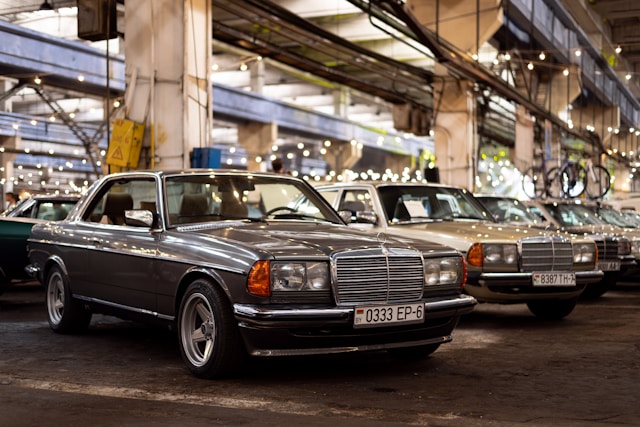
For decades, Benz & Cie. and DMG were fierce competitors. However, the economic pressures following World War I led to a historic merger in 1926, forming Daimler-Benz AG. The new entity’s cars bore the name Mercedes-Benz, a blend of the two legacies. The iconic three-pointed star, which had been Daimler’s symbol since 1909 representing his engines being used on land, sea, and air, was now surrounded by a laurel wreath from Benz’s logo, creating a badge that would become one of the most recognizable in the world.
Innovation Through the Decades
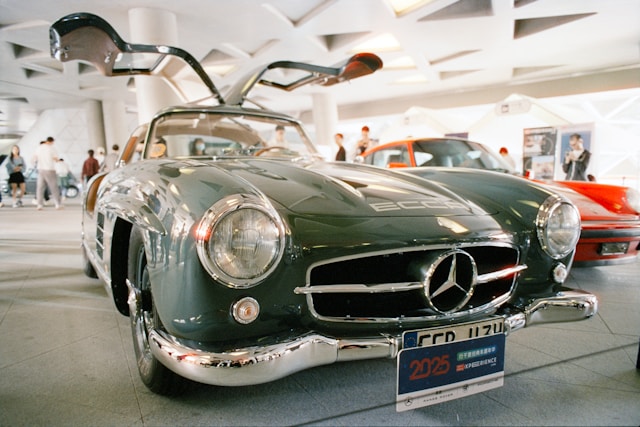
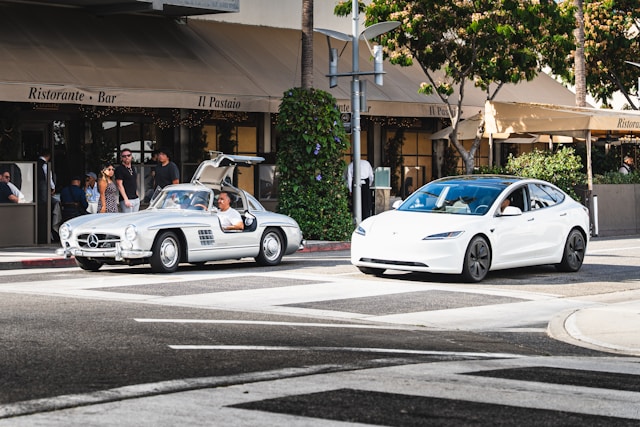
From this point, Mercedes-Benz’s history became a relentless pursuit of technical perfection. The company introduced supercharged engines in the 1920s, creating legendary performance cars like the SSK. In the post-war era, the 1954 300 SL “Gullwing” with its iconic upward-opening doors and world-first direct fuel injection, stunned the world and cemented the brand’s sporting pedigree.
The 1970s brought safety innovations like the anti-lock braking system (ABS) and the airbag, both pioneered by Mercedes-Benz. The 1990s saw the introduction of electronic stability control (ESP), a system that has saved countless lives. Today, the company is at the forefront of electric mobility with its EQ lineup, proving that the spirit of innovation that began in 1886 is as strong as ever.
Conclusion: A Legacy That Continues to Drive Forward
From a single-cylinder motorwagen to autonomous, electric luxury sedans, the history of Mercedes-Benz is a testament to human ingenuity. It remains a brand that doesn’t follow trends—it sets them.