Introduction: Tradition Meets the Future
The history of Mercedes-Benz is not confined to the past. Today, the brand stands at a fascinating crossroads, balancing its legendary heritage with a bold vision for the future. This modern era is defined by two powerful pillars: AMG, representing the pinnacle of performance and V8 power, and EQ, the brand’s ambitious electric vehicle lineup. Together, they represent the duality of a company that respects its past while inventing its future.
The AMG Story: From Independent Tuner to Performance Powerhouse
The AMG story began in 1967 when former Mercedes engineers Hans-Werner Aufrecht and Erhard Melcher founded their own tuning company in a small workshop in Burgstall, Germany. The name AMG stands for Aufrecht, Melcher, and Großaspach (Aufrecht’s birthplace). Their early work focused on racing engines, but in 1971, they made a global statement when their modified Mercedes-Benz 300 SEL 6.3 won its class in the 24 Hours of Spa, finishing an impressive second overall. In 1990, Mercedes-Benz signed a cooperation agreement with AMG, and by 1999, Daimler acquired a majority stake in the company. Today, AMG models are factory-built performance machines, featuring handcrafted engines, aggressive styling, and dynamic driving characteristics. The “One Man, One Engine” philosophy ensures each AMG engine is hand-assembled by a single master technician.
Performance Icons: The AMG GT and 63 Series
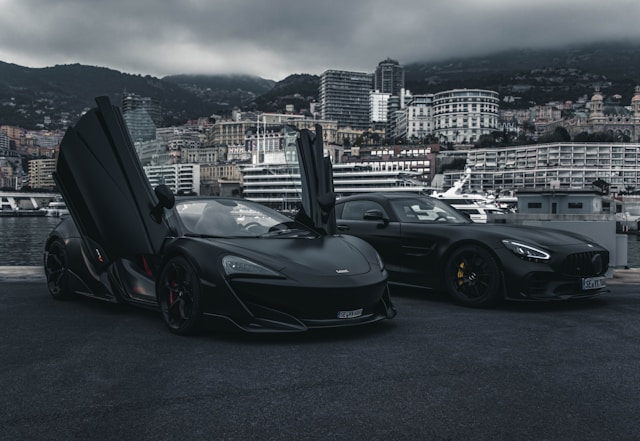
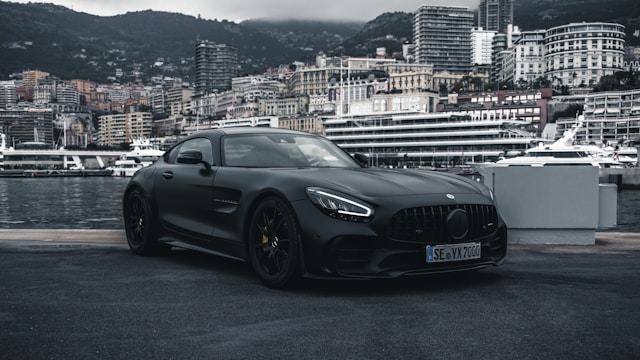
The modern AMG lineup is dominated by the GT series (including the astonishing GT Black Series) and the powerful 63-series models like the E 63 S and C 63 S, which feature twin-turbo V8 engines delivering over 500 horsepower. These cars offer a visceral driving experience that appeals to enthusiasts worldwide, proving that Mercedes-Benz can compete with the best sports car manufacturers.
The EQ Revolution: Electrifying a Legacy
While AMG represents raw power, EQ represents a clean and sustainable future. Mercedes-Benz officially launched its electric sub-brand, EQ, in 2016, signaling a major strategic shift toward full electrification. The name EQ stands for “Electric Intelligence.” The first fully electric model under this brand was the EQC, an SUV introduced in 2019. The EQC offered traditional Mercedes luxury combined with zero-emission driving.
The Vision for the Future: EQA, EQB, EQS, and EQE
Since the EQC, Mercedes has rapidly expanded its EQ lineup. The EQA and EQB are smaller, urban-focused SUVs, while the EQE and EQS are luxury sedans. The EQS, in particular, is a technological tour de force. With a range of over 400 miles on a single charge and a dashboard-spanning “Hyperscreen” that redefines in-car digital interaction, the EQS proves that electric cars can be just as luxurious and desirable as their internal combustion counterparts.
2026 and Beyond: The Electric-Only Era
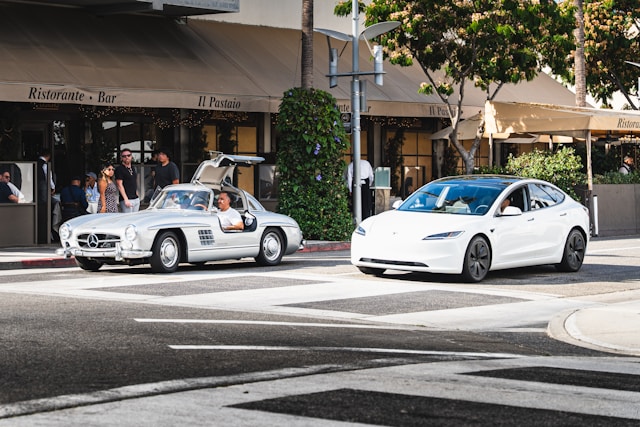
Looking ahead to 2026 and beyond, Mercedes-Benz is committed to becoming a fully electric brand. By 2030, the company aims to go all-electric wherever market conditions allow. This means that the V8 roar of AMG and the silent, instant torque of EQ will coexist for a time, but the future is unmistakably electric. Mercedes-Benz is investing billions in new battery technology, solid-state cells, and sustainable manufacturing processes to ensure that its electric vehicles are not just clean, but also produced with a lower environmental footprint.
Conclusion: The Best of Both Worlds
The modern era of Mercedes-Benz is characterized by a unique dual strategy: offering the high-octane excitement of AMG to satisfy the purists while simultaneously pioneering the electric future with EQ. This balancing act is not an easy one, but Mercedes-Benz has consistently shown that it is a brand capable of mastering complexity. As we move forward, one thing is certain: Mercedes-Benz will continue to lead, innovate, and inspire, just as it has for over 140 years.